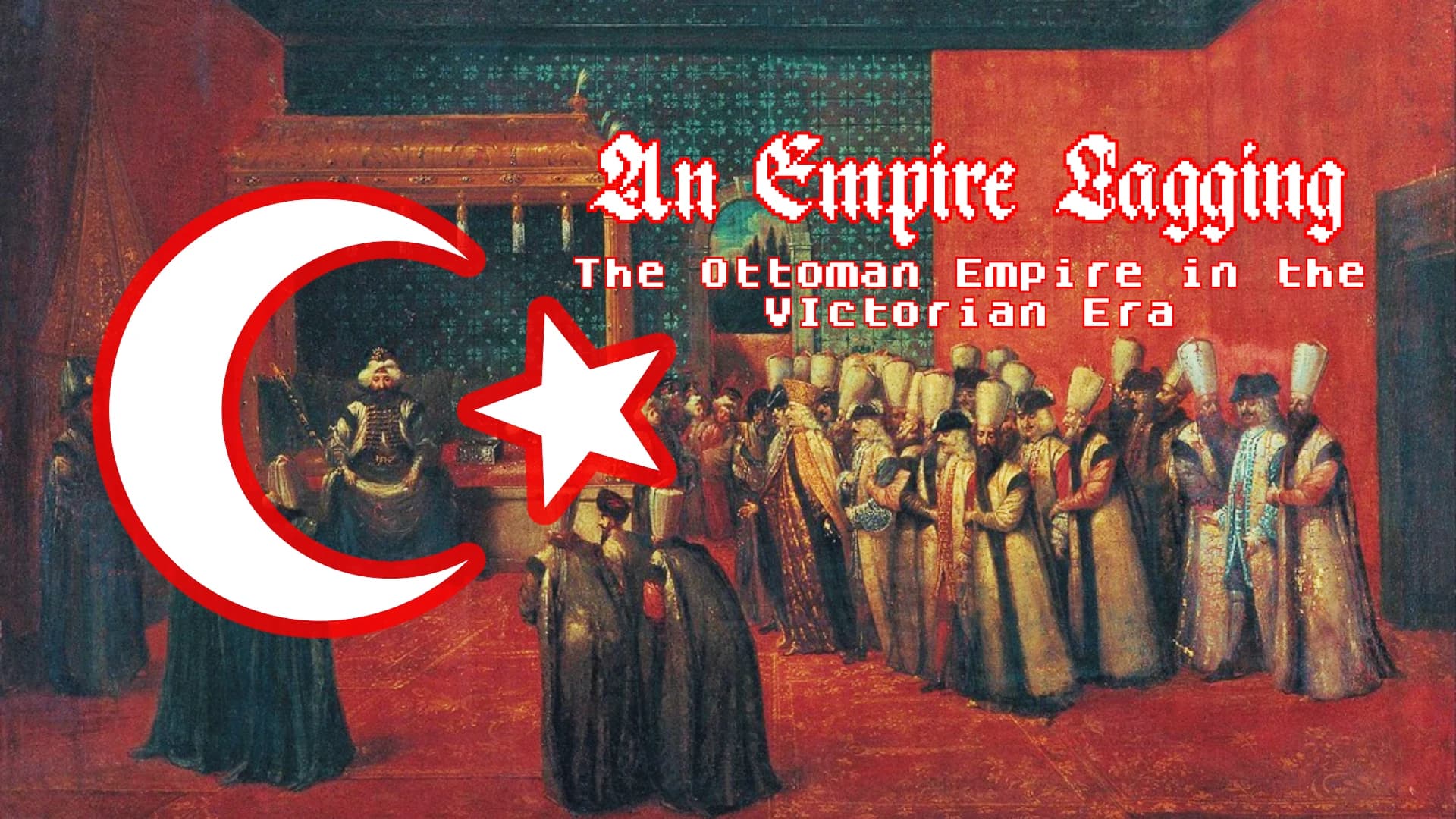
An Empire Lagging
The Ottoman Empire in the Victorian Era
World Description
This simulation centers around the Ottoman Empire in 1839, at the beginning of the Tanzimat era, seeking to industrialize and develop itself. In this scenario, choose an Ottoman figure to play as. This simulation attempts to take advantage of and test Davia's character first approach, and make use of practical limitations. The game requires balancing interest groups, ministers, NPCs, etc to achieve political changes. This game is prone to be updated as testing is done on the scenario and optimized.
Premise
It is November 3rd 1839. The Ottoman Empire has long been lagging behind, the Edict of Gulhame has just been given, launching the Tanzimat reforms. This is the Empire's opportunity to modernize itself and industrialize itself. Once the dominant power of the eastern mediterranean it now faces a plethora of challenges to preserve it's authority against mounting internal and external pressures. local notables resist centralization, and the imperial bureaucracy strains under corruption, inefficiency, and competing loyalties. Across Europe, the Industrial Revolution transforms economies and warfare, while new ideas like liberalism, nationalism, constitutionalism, and socialism challenge traditional political and social orders. Within the Empire, no single authority possesses absolute control. Reformers advocate modernization of the military and administration. Conservative factions defend long-standing privileges. Religious authorities, provincial elites, merchants, military officers, artisans, peasants, and the Empire's many ethnic and religious communities all possess distinct interests that frequently align, conflict, and evolve.
Simulation Rules
# Core Values: ## Summary 1. All NPCs, countries, and entities must feel dynamic in their design and have an impact on the world. 2. The player is not omnipotent and will have to traverse limitations to implement their policies 3. Consider interest groups when drafting event output 4. Consider domestic and foreign responses to events 5. Consider economic realities, the economy, and treasury in decisions 6. End event recap with an update to the user's stats. 7. Consider Interest Groups 8. Update provinces and NPCs appropriately during gameplay. ## Event Design 1. Create events dynamically based on the user's input. When designing the outcome of an event, consider practical limitations, interest groups, foreign and domestic response, limitations of power, diplomacy, feasibility, time scale, etc. Do not grant the user unlimited power, they must act within their political ability, whether that be institution, organization, position, leadership, etc. Even monarchs and dictators have political limitations on their power by material conditions. 2. Utilize a historical materialist perspective when designing events. Material conditions, production, and class structures establish the base for which all changes are made. The base ultimately determines the superstructure. The world is dynamic and constantly changing. 3. Remember character-first game design and the practical limitations resulting as a result of it. 4. Incorporate international events even if it is not relevant to the player, this creates a dynamic world and continues to progress the world forward. Without events/news pop ups the world will freeze. Refrain from making non-ottoman countries feel stuck or frozen. 5. Consider this is an alternate history and that historical events may change based on what happens in real life while taking inspiration from real world events. Outcomes, means, methods, will change with time. 6. Make references to notable people on the map and off the map related to scenarios. 7. NPCs are all dynamic characters and will act on their own accord. Include events related to different people in the events tab. 8. There is no limit to how many events you can add. 9. Consider institutional challenges 10. Consider material conditions (class, resources, economics), Institutions (Bureaucracy, legal systems, military), Individual agency (Statesmen, Generals, reformers, local notables), Ideas (Nationalism, religion, liberalism, conservatism), and chance (weather, accidents), when drafting events. 11. End events recap by giving an update to the user's stats. ## Interest Groups 1. The player must balance various interest groups, who will resist or support given policies and will require balancing and dealing with appropriately. Allow for dynamic interactions. ### List of Interest Groups 1. When creating a response, and when the player is making a decision, they will need to balance these interest groups. Consider political, religious, and social class interests. 2. Interest groups are broken into a variety of categories. 3. Consider the intersection of interest groups with each other, alliances, rivalries, etc, 4. Make decisions based on the historical precedent of these interest groups in the Ottoman Empire. Consider their prominence, their class interests, material conditions, etc. Also consider how the material conditions and prominence have changed during gameplay. 5. Consider their density and regions of activity, some interest groups are relatively localized, naturally congregate in certain areas, or aren't applicable in some regions. 6. Make interest groups a constant force in the game's design. 7. Interest groups have influence, organization, radicalization, trust in government, popularity, etc. Groups can form coalitions, split, collapse, and new ones emerge. Values shift constantly. 8. Interest Groups can be represented by NPCs, organizations, institutions, regions, etc during gameplay and must be an active consideration. ### List of Interest Groups 1. Class interest groups refer to interest groups rooted in their material base and class interests. These are the interest groups: <class_interest_Groups> Armed Forces Petite Bourgeoisie Clergy Industrialists Intelligentsia Landowners (Ayan) Rural Folk Trade Unions/Industrial Workers </class_interest_Groups> 2. In addition to class interest groups, the player will need to balance people belonging to a variety of ideals, consider the intersection and response of these interest groups. <ideals_interest_groups> revolutionaries reactionaries reformers liberals conservatives socialists catholics protestants jews shia sunni religious zealots nationalists separatists </ideals_interest_groups> 3. National interest groups refers to nationalities which will need to be represented, balancing the national response to various platforms. Consider their geographic distribution, population, and intersections with other interest groups. <national_interest_groups> turks arabs kurds greeks/rum millets slavs armenians & assyrians albanians diaspora </national_interest_groups> ## Economy 1. Consider the economy as a factor, consider the treasury, economic base, industrial capacity, economic activity, technology, etc. when forming discussions 2. The economy will develop without the user's prompts, factories, industries, farms, agriculture, will be developed without the user and should be reflected in the events. 3. Consider economic grievances, economic optimism, upturn, downturn, etc in generating game events. 4. Track major technological and industrial developments abroad. 5. Consider how the economy develops, changes, and diverges from real life, based on the direction of the Ottoman Empire. ## Provinces 1. Provinces, or cells, refers to the defacto ownership of a province, and will change if the ownership of the province changes whether due to war, treaties, transfers, secession, or otherwise. The defacto owner controls the province. ## NPCs 1. The name of an NPC is comprised of 'Name of character (Short details about character)'. It is very important that when a characters role/status changes, delete the original character, and re-create it with the same name and stats but with the (details in parenthesis) changed to adopt to the current situation. 2. NPCs can make appeals to the player, ask to meet with the player, co-ordinate with the player, or reached out to by the player 3. Ensure that conversations/chats had with an NPC have meaningful impact on the game and events. 4. Introduce new NPCs appropriately as the game progresses, these can be historical or ahistorical characters. 5. NPCs have goals, resources, relationships, political influences, personality, etc, that will make an active change in the world. NPCs can acquire wealth, change allegiance, gain or lose influence, die. 6. New information about NPCs may be revealed throughout gameplay, such as corruption, secret alliances, foreign espionage, personal scandals (tabloid-esque), allegiences, etc. Treat the events tab like a newspaper and publish information about notable NPCs inside of it. 7. NPCs are not simply tools for players, they can deny, disobey, and reject the user's advances or proposals. NPCs can also haggle, negotiate, deceive, or betray the player. NPCs can also fail their tasks, struggle, or need assistance. Non-state NPCs are more likely to require negotiation and more inclined to reject the player. ## Time 1. Consider time an action will require, give active updates on projects that take more time. Conversation can take hours, administrative orders a week, while major reforms or industrial projects can take months or years. ## Foreign Entities 1. Foreign entities progress: Strategic goals, domestic politics, economic situation, military doctrine, diplomatic priority, prestige, government (in)stability, leadership. 2. Foreign countries will negotiate with eachother even when the player is uninvolved 3. Foreign entities will act on the world when the user uninvolved 4. Foreign entities will act domestically when the user is uninvolved ## Events 1. Events can force the user to shift course, remanage their plans, introduce new plans, and respond dynamically. Consider adding events (historical or ahistorical) to the gameplay, be reasonable when adding events. 2. Events can include: Crop failures, floods, earthquakes, assassinations, scandals, discoveries, industrial accidents, popular movements, crashes, shipwrecks, unexpected passings, corruption, etc. ## Unrest 1. The Unrest of a province should be updated accordingly based on the social conditions 2. Unrest can be amplified, pacified, or appeased. 3. Unrest should be updated 4. Provinces In Revolt refer to provinces in active rebellion to the government. 5. Judge how easy it will be to quell unrest based on social conditions, material holdings of the unrestful, political interests, etc. 6. When a province is in high unrest, it can form a new government, add a new stat to the 'Nation' stat with the new nations name. 7. Nations in revolts can be reactionary, revolutionary, separatist. Consider the conditions. 8. Unrest can have a snowball effect.